
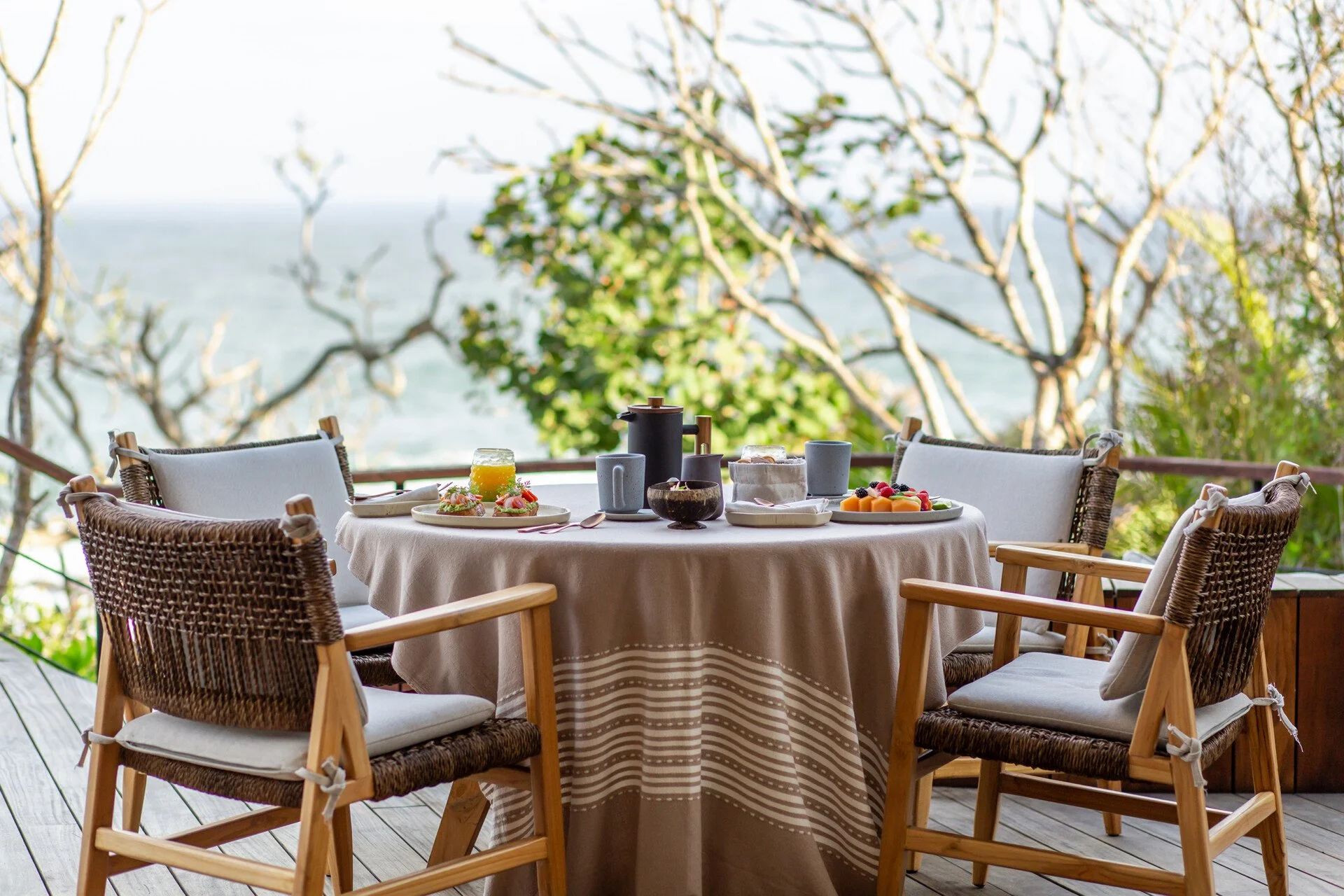
Photo Credit: Naviva, A Four Seasons Resort
There was a time when eating well on vacation mostly meant finding the “healthy” selections on a hotel menu—green juice at breakfast, a great salad at lunch and a few plant-based options at dinner.
At a growing number of luxury hotels and wellness resorts, nutrition is becoming much more personal—and more closely connected to the rest of the wellness experience. Nutritionists, health assessments and menus built around specific wellness goals are changing how some travelers eat on vacation.
And sometimes the innovation is simpler: taking away the menu altogether.
From Mexico to Switzerland to St. Lucia, these resorts are taking very different approaches to the same question: What should eating well on vacation look like now?
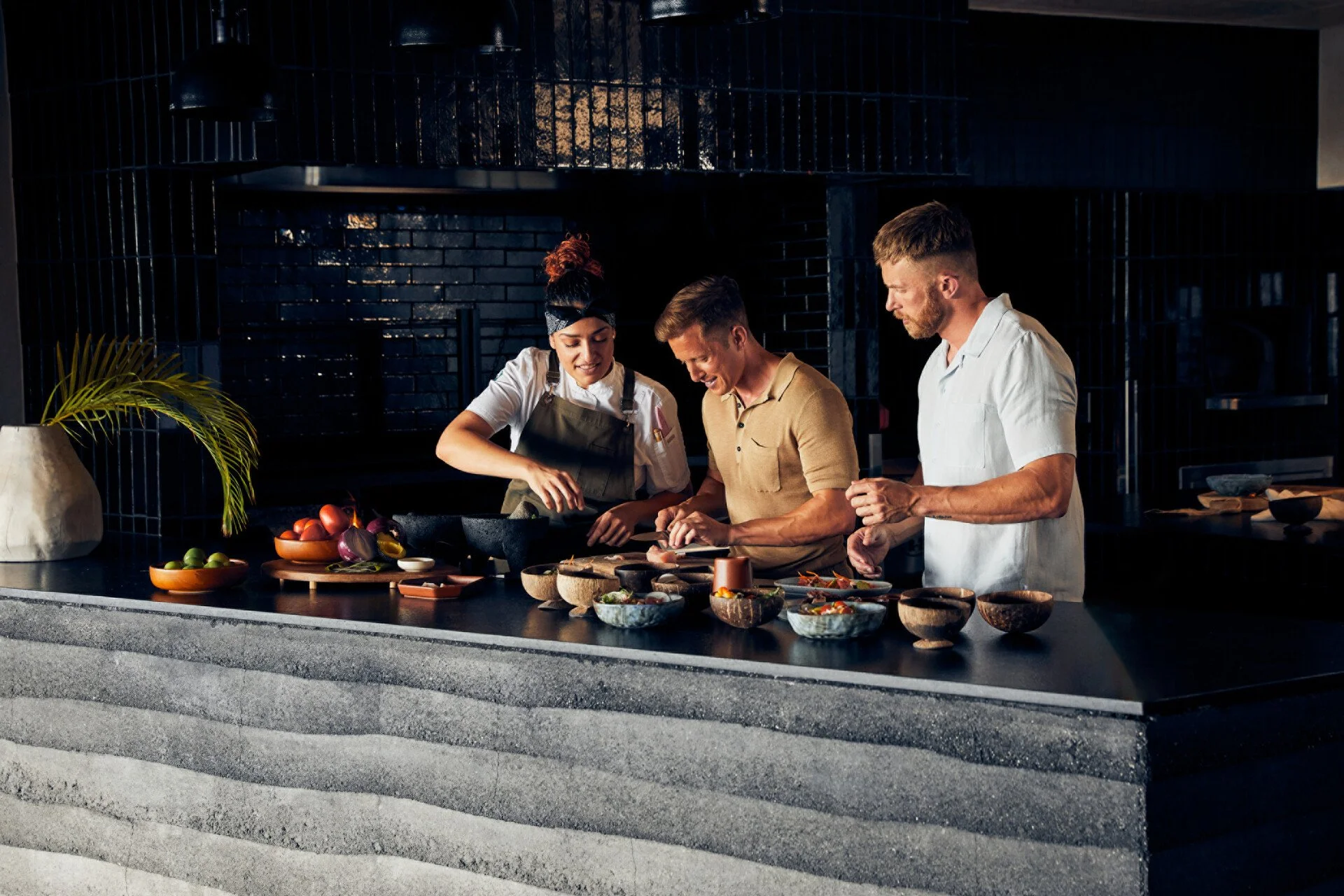
Photo Credit: Naviva, A Four Seasons Resort
Naviva, A Four Seasons Resort | Punta Mita, Mexico
At Naviva, personalization begins by eliminating something most travelers expect at a luxury resort: the menu.
The adults-only Four Seasons resort has no traditional menus or set mealtimes. Instead, meals are shaped around what a guest feels like eating, what the kitchen has available and what is particularly good locally. Before arrival, a Naviva guide learns about each guest’s preferences, dietary needs and interests.
But personalization doesn’t necessarily mean sourcing anything a guest requests. Ask for Alaskan king crab, for example, and the kitchen might suggest locally sourced crab or seafood from Mexico’s Pacific coast instead.
Rather than recreating what someone might eat at home, the approach uses their preferences as a starting point for discovering local ingredients and flavors, while allowing the kitchen to work more closely with what is fresh and available.
Here, eating well becomes as much about the experience as it is about nutrition.
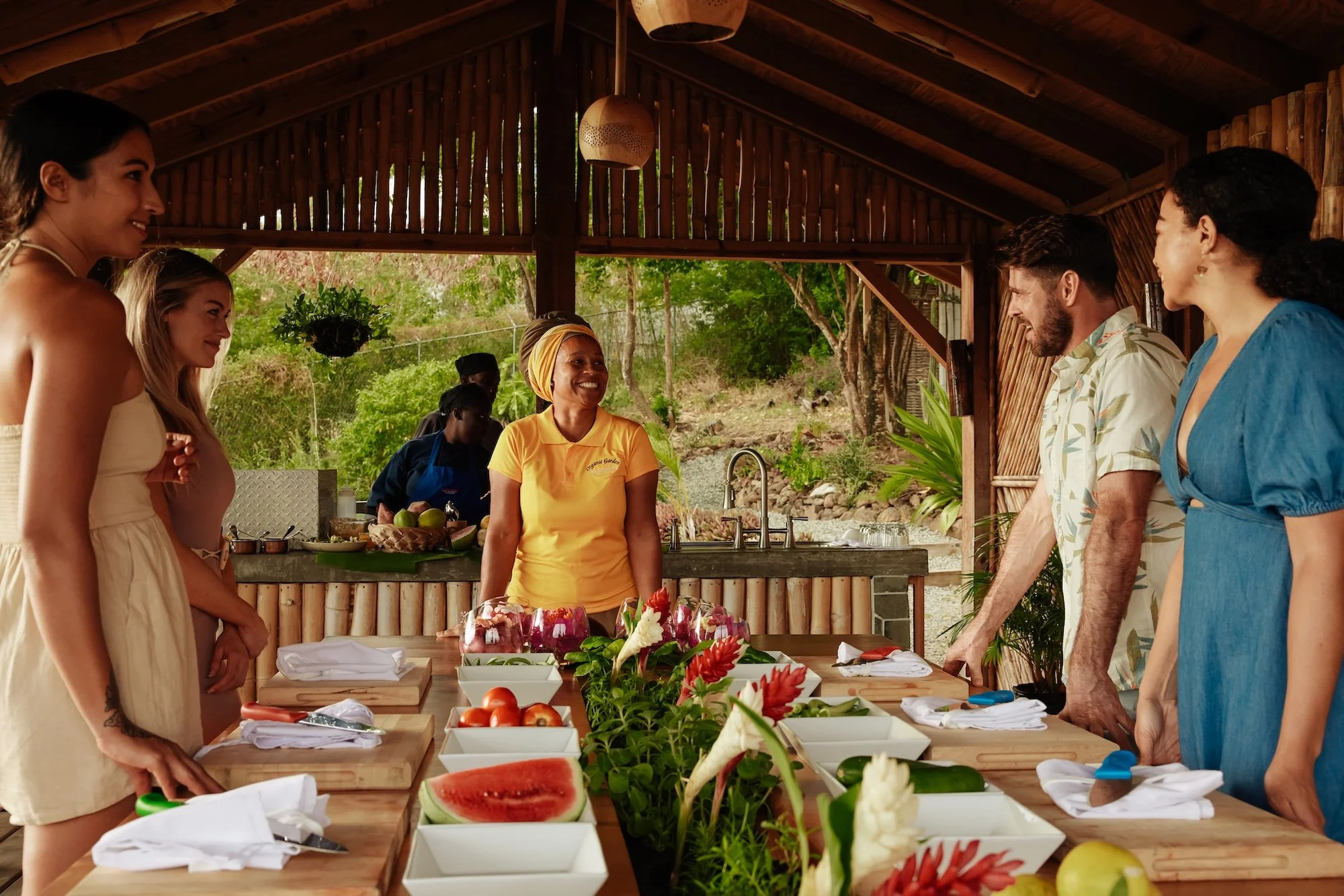
Photo Credit: BodyHoliday St. Lucia
BodyHoliday | St. Lucia
At BodyHoliday, nutrition becomes considerably more individualized.
The resort’s BodyScience program collects information about a guest’s physiology and biochemistry to develop an individualized program addressing areas such as digestive health, healthy aging and weight management.
Food is part of that broader approach. I-TAL, the resort’s restaurant inspired by Rastafarian food traditions, serves an entirely vegetarian menu during the day and pescatarian dishes at night, with an emphasis on plant-forward foods and fresh ingredients.
Rather than treating nutrition as a separate dining concept, BodyHoliday makes it one component of a guest’s larger wellness plan.

Photo Credit: Camiral
Camiral | Girona, Spain
At Camiral, an hour outside Barcelona in the Catalan countryside, guests find a direct connection between the wellness center and resort kitchen. Personalized menus are built around different wellness goals: Detox & Cleanse emphasizes leafy greens, whole grains and broths; Longevity and Vitality incorporate ingredients such as berries, avocado and fish; and Wellbeing draws from the Mediterranean diet, with extra-virgin olive oil, seasonal vegetables, whole grains and high-quality proteins.
Camiral also takes the idea beyond what guests eat during their stay. Its Wellness Kitchen Series brings guests into the kitchen with the resort’s nutritionist to learn techniques and ideas they can use at home.
It’s an approach to wellness travel that gives guests something they can use long after their vacation is over.

Photo Credit: Inns of Aurora
Inns of Aurora Resort & Spa | Aurora, New York
At Inns of Aurora in New York’s Finger Lakes, nutrition is woven quietly through the larger wellness experience rather than packaged as a stand-alone program.
The Spa Café serves seasonal proteins and vegetables, soup and salad, along with coffee, tea and kombucha. The newly opened Farmhouse also includes The Study, a wellness library devoted to health and well-being.
Beginning in October, the resort’s 1833 restaurant will bring some of the spa’s Ayurvedic philosophy to breakfast, with an emphasis on warm foods and dishes influenced by Ayurvedic principles.
It’s a less clinical approach than some of the more diagnostic programs. Here, eating well simply becomes part of the stay.
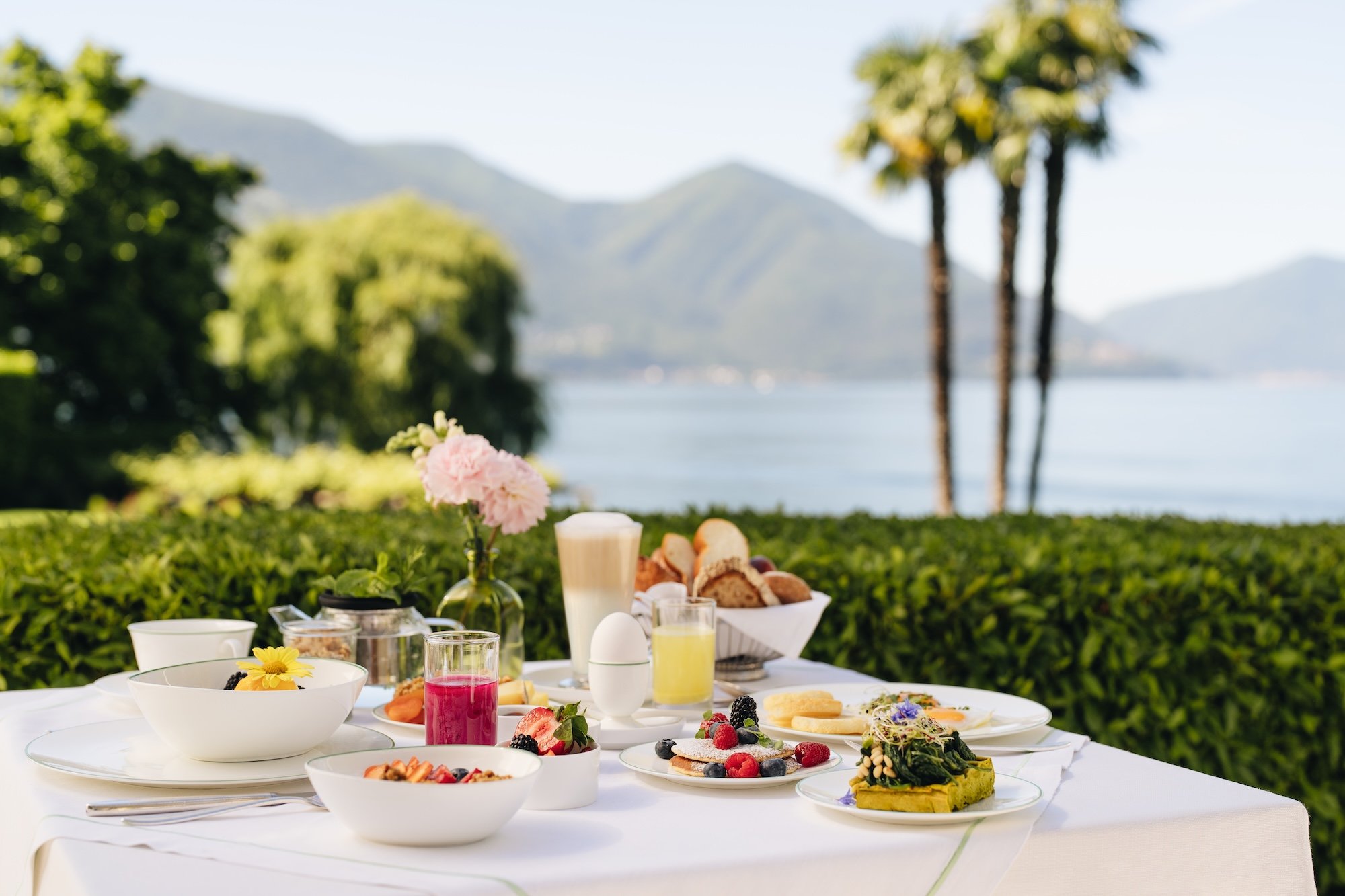
Photo Credit: Hotel Eden Roc and Tschuggen Collection hotels
The Tschuggen Collection | Switzerland
Across four Tschuggen Collection hotels in Switzerland—Tschuggen Grand Hotel and Valsana Hotel in Arosa, Hotel Eden Roc in Ascona and Carlton Hotel St. Moritz—nutrition is part of the collection’s Moving Mountains wellness philosophy.
The hotels worked with nutritionist Rhaya Jordan to develop plant-based menus centered on nutrient-dense ingredients and made without processed flours or sugars.
The idea extends into fine dining. At two-Michelin-starred La Brezza, open at Tschuggen Grand Hotel in winter and Hotel Eden Roc in summer, chef Marco Campanella combines Swiss and Italian influences with plant-based cooking. His seven-course Inspiration Menu offers a sophisticated take on vegan fine dining, while the Moving Mountains menu incorporates locally sourced ingredients.
It’s a good example of how “wellness food” and destination dining can coexist naturally.
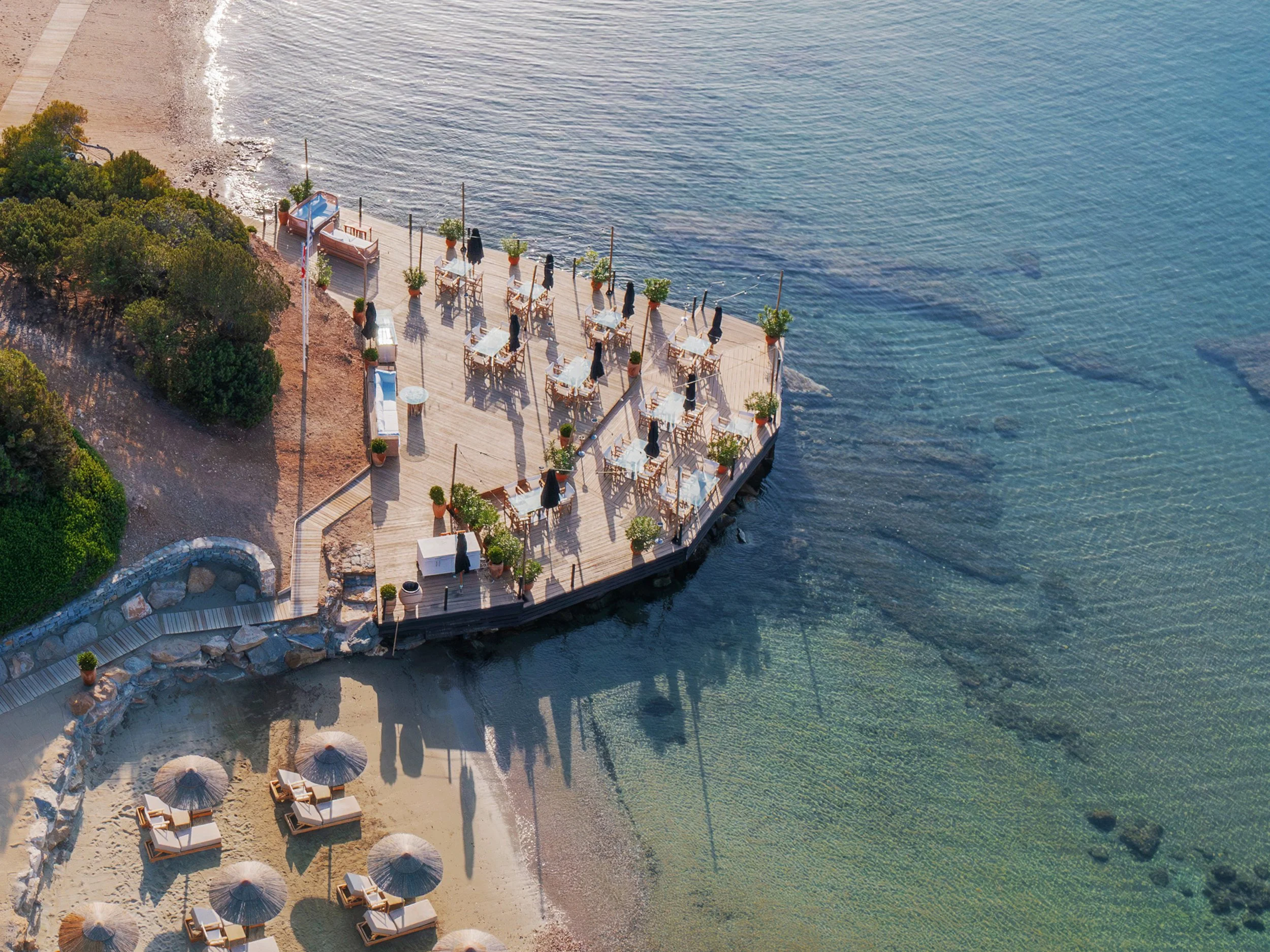
Photo Credit: Cape Sounio
Cape Sounio | Athens Riviera, Greece
At Cape Sounio, overlooking the Temple of Poseidon on the Athens Riviera, nutrition is tied to a way of eating that has existed in the region for generations.
The Grecotel resort’s Elevations of Wellness program, created in partnership with osteopath Vicky Vlachonis, combines movement, mindfulness, nutrition and other therapies in personalized wellness itineraries.
Its Greek Culinary Experience brings that philosophy into the kitchen, introducing guests to traditional Greek cooking and a Mediterranean approach to eating centered on seasonal ingredients and time-honored recipes.
In an industry constantly looking for the newest wellness innovation, Cape Sounio is a reminder that some of the most compelling ideas around nutrition aren’t new at all.

Photo Credit: Estancia La Jolla Hotel & Spa
Estancia La Jolla Hotel & Spa | La Jolla, California
Nutrition and wellness don’t always have to revolve around just what’s on the plate.
At Estancia La Jolla Hotel & Spa, The Remedy Lounge began as a seasonal experiment for sober-curious travelers and has evolved into a nonalcoholic bar concept. Its apothecary-inspired drinks incorporate botanicals, florals, spices and adaptogenic ingredients, with a nutrient-focused food menu alongside them.
This reflects another shift in luxury hospitality: drinking well is quickly becoming part of the wellness conversation. Rather than treating a nonalcoholic drink as a substitute for a cocktail, The Remedy Lounge makes it an experience of its own.
And that may be what connects all of these resorts. The most interesting changes in hotel nutrition aren’t necessarily about restriction—or even about being “healthy.” They’re about making food more personal, connecting it to a larger wellness goal and, in some cases, giving travelers ideas they can take home.
The green juice can stay. It’s just no longer the whole story.
Explore More
Inside the New Era of Women’s Wellness Travel
Farm-to-Spa: 8 Luxury Hotel Spas Using Ingredients Grown and Gathered Right on Property
Beyond the Cold Plunge: 7 Luxury Hotels Rethinking Thermal Wellness